Body Fat Percentage Calculator: Why Real Measurements Beat a BMI Guess

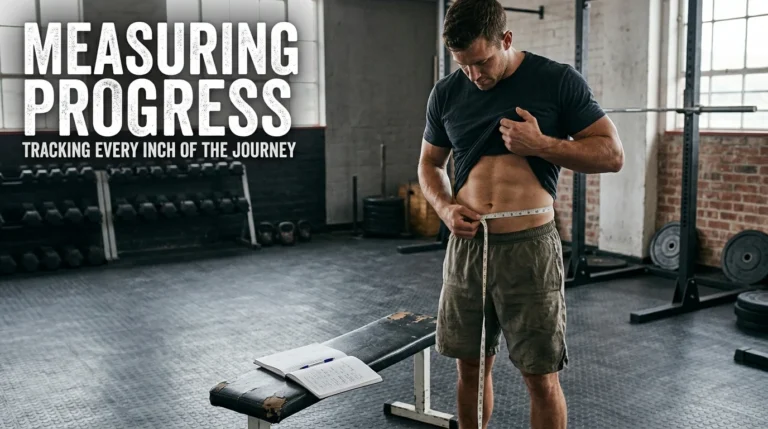
A body fat percentage calculator tells you something your bathroom scale and your BMI chart both miss: how much of your weight is fat, and how much is everything else. Measure your neck, waist and height, and the Navy method’s formula does the rest.
Here’s why that distinction actually matters. Two people can share the same height and weight and have wildly different body fat, and BMI can’t tell them apart at all. This guide covers how to calculate a body fat percentage calculator result by hand, why it beats BMI for anyone with real muscle on their frame, and what the number actually means once you have it. When you’re ready to run your own measurements, our body fat percentage calculator handles the maths and sorts your result into a category automatically.
- A body fat percentage calculator (Navy method) uses neck, waist, height, and hip for women, run through a formula validated against underwater weighing.
- Body fat percentage calculator vs BMI: BMI only knows weight and height, so it can’t separate muscle from fat. One study found over 25% of male athletes were misclassified as overweight by BMI, versus under 4% by actual body fat.
- Accuracy published by the original research: correlation of 0.90 for men, 0.85 for women, against hydrostatic weighing.
- It’s free, takes a tape measure and two minutes, and needs no scan or lab visit.
- Track the trend over months, not a single reading down to the decimal.
What does a body fat percentage calculator actually measure?
It splits your body weight into two categories: fat mass and everything that isn’t fat, meaning muscle, bone, organs and water. The version on this site uses the US Navy circumference method, built in 1984 by researchers Hodgdon and Beckett at the Naval Health Research Center. Instead of calipers or a dunk tank, it works from a few circumference measurements and your height.
That’s a meaningfully different question than the one a bathroom scale or a BMI chart answers. Weight alone can’t tell you whether 90kg is mostly muscle or mostly fat. A body fat percentage calculator formula for men and women, built from real circumference data, at least attempts to separate the two.
It’s an estimate. Not a scan. It won’t match a DEXA machine down to the decimal, and it was never trying to. For two minutes with a tape measure, it gets close enough to actually be useful, which already puts it ahead of anything that only looks at your weight.
Here’s the part that matters more than the measuring itself. Body fat tracks with things like cardiovascular risk and metabolic health far better than body weight ever does, and miles better than BMI. Put two people on the same scale, same height, same BMI on paper. Their health can look nothing alike. The reason almost always comes down to one thing: how much of that number on the scale is fat, and how much is muscle.
How to calculate body fat percentage calculator results by hand
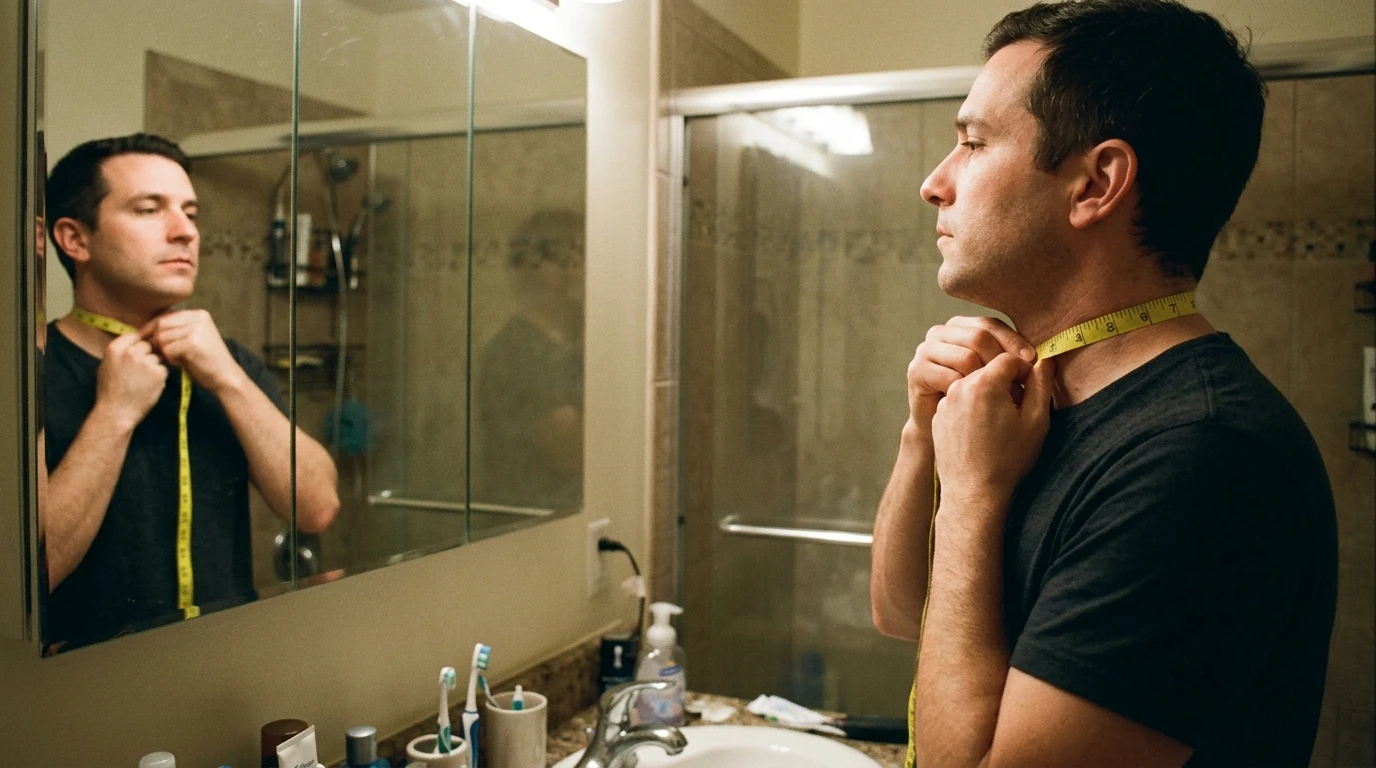
Men need three numbers: neck, waist, height. Women need a fourth. Hip circumference, because fat doesn’t sit on a woman’s body the way it sits on a man’s, and skipping that measurement costs real accuracy, not a rounding error.
All measurements in centimeters for this version. Worked example: a man, 178cm tall, 40cm neck, 87cm waist. Waist minus neck is 47; log10(47) is about 1.672. Log10(178) is about 2.250. Plug those into the denominator: 1.0324 − (0.19077 × 1.672) + (0.15456 × 2.250) works out to roughly 1.061. Divide 495 by that, subtract 450, and you land at about 16.4% body fat.
There’s also a version of this same formula built for inches instead of centimeters, one that skips the density conversion and spits out a percentage directly. Different path, same underlying math, and the two agree closely when you feed them identical measurements.
Body fat percentage calculator for men vs for women
Men get the easy version: neck and waist, nothing else. Fat on a man’s body tends to pile up around the abdomen, so two measurements capture most of the picture. Women need a third input, hip circumference, because fat spreads across the hips and thighs instead of concentrating at the waist the way it does on men. Skip hip and run the men’s formula on a woman’s body anyway, and the number doesn’t come out a little off. It comes out wrong in a way that actually matters.
You can’t average the two formulas either, or fudge one into the other with a rough adjustment tacked on. They came out of separate regression studies on separate groups of people. That extra hip measurement in the women’s version isn’t padding. It’s carrying real weight in the math.
Body fat percentage calculator vs BMI: why the gap matters
BMI is weight divided by height, squared. That’s the whole formula. It has no idea whether that weight is fat or muscle, and for anyone who isn’t sedentary and average, that blind spot gets expensive fast.
One study, presented at the European Congress on Obesity, looked at 622 male athletes. Standard BMI cutoffs flagged more than a quarter of them as overweight or obese. Measure their actual body fat, and under 4% genuinely were. The researchers didn’t hedge on the cause: BMI can’t tell lean mass from fat mass, so a muscular athlete with low body fat ends up filed in the same bucket as someone actually carrying excess weight.
It’s not just elite athletes. A separate analysis of over 33,000 student athletes, aged 11 to 19, compared BMI against skinfold-measured body fat. BMI’s obesity rate came out at 13.3%. The skinfold method put it at 5.95%. Of everyone BMI had flagged as obese, 62% turned out to be false positives once body fat was actually measured.
None of this means BMI is useless. For a large, mostly sedentary population, it’s a cheap, decent rough screen. It just falls apart for exactly the people most likely to go looking for a body fat percentage calculator in the first place: anyone who lifts, plays a sport, or has put on real muscle.
Body fat percentage categories, explained
Once you’ve got a number, the next question is what it actually means. These classification bands come from the American Council on Exercise:
| Category | Men | Women |
|---|---|---|
| Essential fat | Under 6% | Under 14% |
| Athletic | 6–13% | 14–20% |
| Fitness | 14–17% | 21–24% |
| Acceptable | 18–24% | 25–31% |
| Obese | 25% and above | 32% and above |
Essential fat is the floor your body needs for basic hormonal and organ function, not a target to chase. Sitting at or below it for an extended stretch, especially for women, carries real health risk rather than being some extra-impressive fitness milestone.
Context matters more than the raw label, too. A 28% reading for a woman sits comfortably in “acceptable,” not “obese,” despite what a generic online chart aimed at men might imply if you’re not paying attention to which column you’re reading. Always check the column that matches your sex before drawing any conclusion from where your number lands.
Using our body fat percentage calculator
Enter your neck, waist, height, and hip if applicable. Get your estimated body fat percentage, your category, and an optional fat mass / lean mass split. Free, no sign-up.
Open the calculator- Measure neck just below the larynx, waist at the navel (men) or narrowest point (women), and hip at the widest point if you’re using the women’s formula.
- Keep the tape snug against skin, not compressed, and measure standing upright.
- Enter your numbers, pick your sex and unit, and read your result plus category.
- Add your body weight if you want the fat mass / lean mass breakdown too.
The whole process takes less time than finding a DEXA clinic near you, and it costs nothing beyond a tape measure you likely already own. That’s the real case for this method: not that it’s flawless, but that it’s genuinely usable, repeatable, and free.
How accurate is a body fat percentage calculator, really?
The original 1984 validation tested the formula against hydrostatic underwater weighing, the reference method of the time. For men, the correlation was 0.90. For women, 0.85. Both are strong, though the women’s version is a touch less precise, largely because fat distributes less predictably around the waist in women than in men.
There’s a documented bias worth knowing honestly: the method tends to underestimate body fat at the high end of the range and overestimate it at the low end. The Navy’s own later research flagged this directly, and the published standard error of the estimate sits around 3 to 4 percentage points either way. That’s not a reason to distrust the number. It’s a reason not to treat the decimal point as gospel.
How does that compare to the alternatives available to a regular gym-goer? Skinfold calipers carry a similar error range but depend heavily on the tester’s technique and consistency, which is precisely why the student-athlete study cited earlier used skinfolds as its more trustworthy baseline against BMI. Bioelectrical impedance scales, the kind built into many bathroom scales, can swing by several percentage points based on nothing more than how hydrated you are that morning. A tape measure, by comparison, only cares about your actual shape, which is part of why it holds up reasonably well despite being the cheapest method on the list.
Mistakes that throw the number off
- Pulling the tape too tight, which compresses soft tissue and lowers your reading artificially.
- Measuring waist at a different spot each time, usually either higher or lower than the navel.
- Using the men’s formula on a female body, or the reverse, since the equations aren’t interchangeable.
- Comparing today’s reading against a measurement taken after a big meal or a long run.
- Expecting lab-grade precision from a tape measure. It wasn’t built for that, and it doesn’t need to be.
- Letting a different person measure you each time. Technique varies slightly between people, so the trend matters more than any single reading if you swap measurers.
- Holding your breath or sucking in while measuring the waist, which defeats the entire point of the test.
None of these mistakes make the method useless. They just add noise. Fix the technique, and a tape measure genuinely holds its own against far more expensive equipment.
Frequently asked questions
How is a body fat percentage calculator different from BMI?
BMI only uses your weight and height, so it can't tell muscle from fat. A body fat percentage calculator uses circumference measurements to estimate how much of your weight is actually fat, which is why muscular people often get a very different, more accurate picture from it than from BMI.
How do you calculate body fat percentage calculator results by hand?
Measure neck, waist, and height (plus hip for women), then plug them into the Navy method formula: for men, 495 divided by a value based on the log of waist minus neck and the log of height, minus 450. The women's version adds hip circumference to that calculation.
Is the Navy body fat method accurate?
The original 1984 validation found a correlation of 0.90 for men and 0.85 for women against underwater weighing, with a standard error of about 3 to 4 percentage points. It's considered one of the more reliable at-home methods, though it's less precise at very high or very low body fat levels.
Can I use a body fat percentage calculator if I'm very muscular?
Yes, and it's arguably more useful for you than BMI ever would be. Since it estimates fat specifically rather than total weight, it won't penalize you for carrying extra muscle the way a BMI chart does.
What's a healthy body fat percentage?
Roughly 14 to 24% for men and 21 to 31% for women is generally considered a healthy, sustainable range, based on American Council on Exercise classifications. Going much lower isn't automatically healthier and can carry real risks if sustained long-term.
Do I need special equipment for a body fat percentage calculator?
No. A standard soft tape measure is all it takes. No calipers, no scan, no appointment.
What I’d actually do
Measure once, carefully, following the technique notes above. Run the numbers through our body fat percentage calculator, note the result and the date, and don’t remeasure for at least a month. Body composition moves slowly, and a month gives you a real trend instead of tape-measure noise.
Small experiment worth trying: calculate your BMI alongside your body fat percentage. If the two tell noticeably different stories, that gap itself is useful information about how much of your weight is muscle. From there, browse the rest of our body composition tools, or read our reverse TDEE calculator guide if nutrition numbers are next on your list.